Showing posts with label pipe. Show all posts

How to Determine NPT Pipe Sizes by Measurements

Thursday, April 10, 2014 | Labels: , , , , , , , | 0 comments |
How to Determine NPT Pipe Sizes by Measurements

The National Pipe Tapered Thread (NPT) was created in 1864 to set a standard of measurement. An NPT pipe has a tapered male end and a threaded female end to join pipes for mechanical and hydraulic applications. Taking proper measurements of the pipe ends allow you to purchase fittings, nipples and caps that fit the pipe correctly and form a tight seal.

Instructions

    1

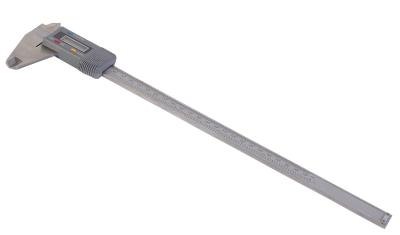
    Turn on a pair of digital calipers. Spread the large jaws apart that measure outside diameter (OD).

    2

    Place the jaws around the threads of a male pipe and close them until they touch the pipe. Read the digital display of the OD.

    3

    Measure the OD of a pipe with female (internal threads) on the end of the pipe with digital calipers.

    4

    Lay a pipe with male threads on a flat surface. Pull out the tip of a measuring tape and lock it in position at the 1-inch mark. Align the tape measure tip with the end of the pipe. Count the threads on the pipe in the 1-inch area. Use a pencil point to touch each thread as you count it for an accurate measurement of threads per inch (TPI).

    5

    Compare your OD measurements and TPI to a pipe thread size chart and choose the size closest to your measurement to obtain the nominal pipe size.

Continue reading...

Tools for Bending Exhaust Pipe

Saturday, December 21, 2013 | Labels: , , , , | 1 comments |
Tools for Bending Exhaust Pipe

An automotive fabricators pipe-bending tools must create accurate bends at precise angles without causing damage to the exhaust pipe. Gentle, accurate tools are particularly important to custom hot rod and motorcycle fabricators; these workers use top-of-line materials and often have to get it right the first time around.

Press Bender

    The term press bender generally refers to bench or floor-mounted equipment that create bends by compressing pipe between a movable arm and fixed die. The press benders die is shaped like a wedge and its radius determines the acuity of the pipes bend. Press benders allow the fabricator to adjust the angle of the exhaust pipe bend, usually by means of a dial.

    To use a press bender, the exhaust pipe fabricator chooses a die and attaches the die to the benders base plate. The fabricator inserts a pipe into the benders saddle, a pre-formed seat, and secures the material with the benders clamp. The tools bending arm presses against the pipe and the pipe presses against the die, assuming the dies form. A manual hand crank, air compressor or hydraulic pump creates the action of the press benders pressing arm.

Roll Bender

    The roll bender transforms straight tubing into long, sweeping arcs or circles, particularly for custom exhaust fabrication. The roll bender is a large, stand-alone piece of equipment and usually looks like a large, rectangular box. The primary components of the roll bender, the rollers, protrude from either the top or side of the box. Rollers look like pulleys; they are round with a tubular channel cut along their circumference. Arranged in a triangular pattern, the bottom rollers are stable and the top roller is mobile.

    To use a roll bender, the fabricator places exhaust tube into the bottom rollers channels and activates the motion of the machines top roller. The top roller presses against the pipe, bending it into the space between the rollers. As the pipe bends, the rollers turn and push the pipe. As such, the roll bender doesnt just bend pipe at a single point, like the manual and hydraulic bender, but across its entire length to create large bends.

Rotary Bender

    Typically powered by hydraulic pump, the rotary bender bends pipe by pressing and rotating the pipe against a fixed, half-circle die. In addition to the fixed, half-circle die, the rotary bender has mobile, half-cylinder die that serves as a clamp and pressing arm.

    To use a rotary bender, the exhaust fabricator mounts a pipe between the fixed die and adjustable die, tightens the adjustable die against the pipe and activates the machine. Once activated, the rotary benders pressing arms force the adjustable die to press against the pipe and rotate around the fixed die. Because of its size and power, the rotary bender is capable of quickly creating accurate bends in thick, large-diameter pipe.
Continue reading...

How to Size Pipe Headers

Monday, November 25, 2013 | Labels: , , , , | 0 comments |

The size of an exhaust header pipe should match the needs of a particular vehicle. You can find the size of a header pipe by performing a simple math equation. To do this you first need to obtain variables to use in the equation. These variables include the engines cubic inch displacement, its maximum revolutions per minute and the outside diameter of the header tube. You can find the variables for the equation by referencing your owners manual or a repair manual for the vehicle.

Instructions

    1

    Write the equation for calculating pipe header size. This is expressed as L = CID x 1900/RPM x OD.

    2

    Input the cubic inch displacement of the engine for CID. Input the maximum RPM of the engine into the equation. Input the Outside Diameter of the header tube for OD in the equation.

    3

    Multiply the CID by 1900 and note the result. Multiply the maximum engine RPM by the OD and note the result. Divide the first result by the second result to obtain the size of the pipe header.

Continue reading...